CURATED BY Karen Diner
Few traditions in the world celebrate life, memory, and death with as much emotion and color as Day of the Dead (Día de Muertos) in Mexico.
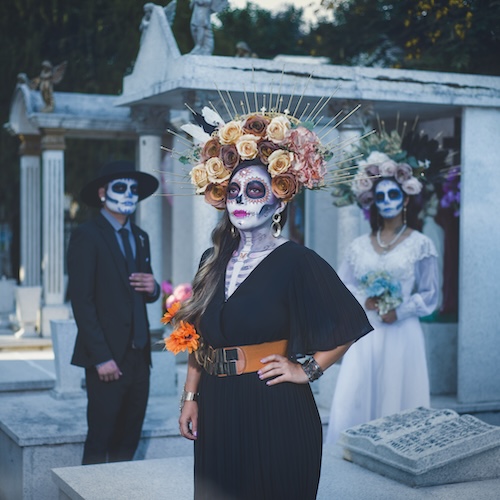
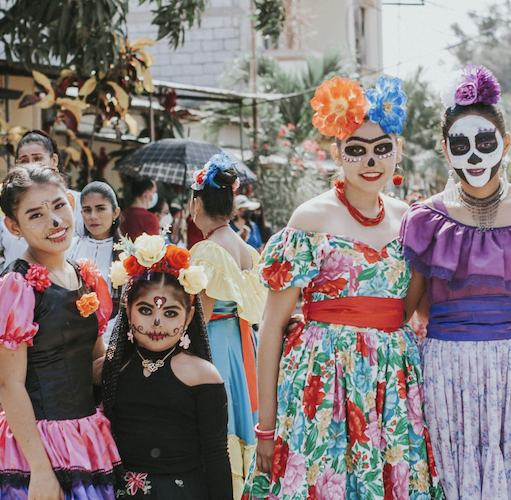
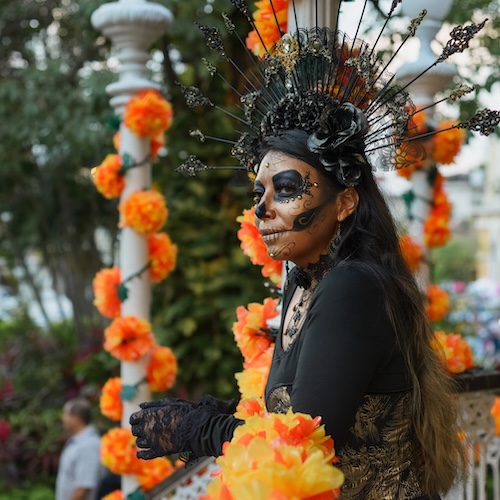
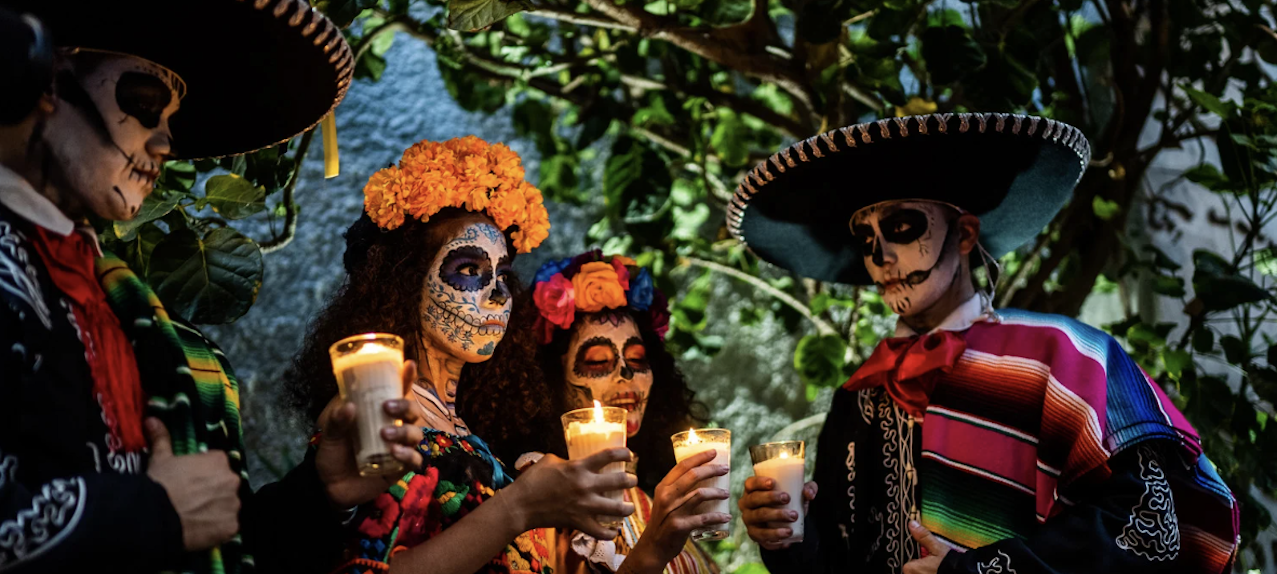
We celebrate it on November 1 and 2, when this deeply meaningful tradition brings families together to honor those who are no longer with us. Homes, streets, and cemeteries are filled with cempasúchil flowers, candles, papel picado, photographs, altars, and offerings. Favorite dishes, water, photographs, pan de muertos, and personal items are placed on the altar as a symbolic way of welcoming the souls back home.
It’s not simply about remembering the dead. It’s about welcoming them back home.
Each element of the offering has a meaning. Photographs remind us of those who have passed away, candles light the way, cempasúchil flowers guide the souls, water quenches their thirst, and pan de muertos and favorite dishes evoke the moments shared together.
In Mexican tradition, during these days, death does not simply represent a farewell. There is a belief that the souls of loved ones return temporarily to visit their families and enjoy the essence of what they loved in life.
To understand Día de Muertos, we must change the way we view death. It is a celebration of remembrance.
Día de Muertos has its roots in ancient Indigenous cultures and, over time, incorporated elements of Catholic tradition. But above all, it represents a deeply Mexican way of understanding death: not as a final goodbye, but as an opportunity to remember, celebrate, and keep alive the bonds with those we love.
If one had to choose one of the most iconic places to experience this celebration, Michoacán would be among the top choices.
Particularly in Pátzcuaro and Janitzio, the Purépecha communities preserve wake rituals that have been passed down through generations. At night, the cemeteries are transformed into intimate spaces illuminated by hundreds of candles, as families place flowers and offerings beside the graves of their loved ones.
Janitzio offers one of the most iconic images of the celebration: the lake, the candles, the flowers, and the communities gathered to honor their dead. It is a deeply spiritual and moving experience, rather than merely a tourist spectacle.
Oaxaca offers a completely different and extraordinarily rich interpretation.
During this time of year, the city and its communities are filled with altars, markets, music, flowers, and fragrances. Traditions vary from one community to another, but there is always a deep connection between families, memory, and the land.
Cuisine plays a central role. Mole negro, tamales, chocolate, pan de yema, fruits, and other traditional dishes are part of the offerings.
Oaxaca is probably one of the most well-rounded destinations for anyone looking to experience Día de Muertos by combining culture, cuisine, art, design, and tradition.
But in every corner of Mexico, you can experience Día de Muertos in a unique and unforgettable way. Each destination has its own rituals, details, and distinctive traditions.
Because Día de Muertos isn’t meant to make us forget that life ends.
On the contrary.
It reminds us that as long as we remember, the people we love continue to be part of our story. Perhaps that is one of the reasons why this Mexican tradition has captivated the world: because behind its colors, scents, and extraordinary beauty lies a deeply universal message.
Death is inevitable. Forgetfulness is not.